Mary moves into the Church-Army hostel for young women
Other PeopleMary’s move to the Church Army Hostel for Young Women marks a sharp change from temporary shelter within the Botham home to life under the hostel’s rules. Forced out by the family’s financial limits while Mr Botham is seriously injured, she leaves with a small suitcase and four pounds. The journey also brings her first recovered memory: a childhood longing to see inside other people’s homes, a desire that echoes her present search for a place where she can belong.
Departure from the Botham home
The move follows the upheaval caused by Mr Botham’s injury. His condition is described as most serious, and Mary understands that he may not recover enough to work as a carpet-layer. Mrs Botham is at the hospital day and night beside her husband, drinking more heavily, or at least more openly. The home itself seems vulnerable and strained, as though it too knows that its circumstances have changed. Mary cannot remain there simply because she has nowhere else to go.
She asks Gavin whether they might stay in the house and hope that the others return. His reluctant, scornful response makes the constraint plain: the family cannot afford to keep her, and, as he says, there had never been any leeway. His question about where she will go turns the problem from a hope of staying into the practical necessity of leaving. Mary shows him the piece of paper with the hostel address and explains that she has been told someone will call ahead and that things will be all right. Gavin doubts the assurance, though he supposes the arrangement may work for a while; what troubles him is the thought of her there.
Together, Gavin and Mary pack her suitcase. It contains clothes belonging to Sharon and Mrs Botham, garments that have more or less become Mary’s. Mary would like to take a book or two but does not risk asking. Gavin explains how to reach the address by Underground and gives her four pounds, all he can spare. At the front door he embraces her quite tightly. Mary senses that he is already on the other side of their parting, and breaks away quickly to hurry down the steps. His help is real, but neither the embrace nor the money can make the house available to her any longer.
The walk and the first memory
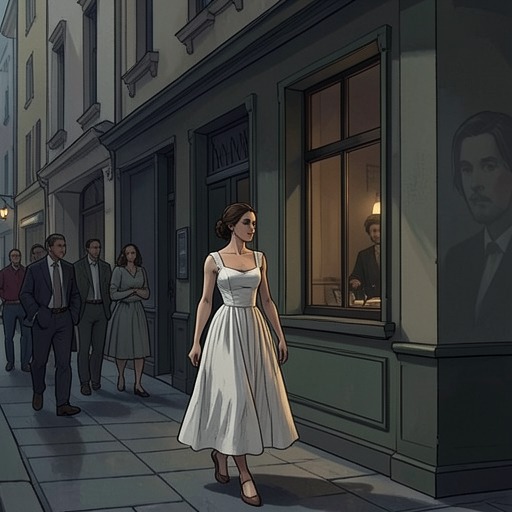
Mary does not want to go underground again, so she walks. The suitcase is light at first and grows steadily heavier as the day closes in. She asks people for directions by holding up the small sheet of paper. Some cannot help; others are so poor at explaining that they cannot guide her, while some find the paper itself distasteful and move on without answering. She reaches the address in the end, although the journey makes the hostel feel less like a chosen destination than the only route left open to her.
On the way, Mary’s first memory returns. She stops, puts down the case, and lifts her hands to her hair. A child’s shout makes her turn shyly, but the remembered scene draws her elsewhere: she is young, standing at evening on the grey brow of a terraced hill. The city park gates have just been shut, and the keeper walks away with his keys in his pocket. The boys have gone home, safe behind other people’s windows, while families settle against the dark inside their rooms.
The child Mary wants to shine a light through those windows and see the lives concealed there: carpets, cracks in papered walls, and shadows on stairs. She knows she will not be let inside, then turns and runs where she is supposed to go. This recollection does not explain her identity, but it gives the present journey a newly visible emotional echo. Now, carrying her case through unfamiliar streets and asking strangers to read her destination, Mary is again outside other people’s homes, seeking a place in which to stay.
Arrival and the hostel’s rules
The hostel is introduced not as an uncomplicated refuge but as a place for women who have suffered what the narrative calls a smash. Its residents have, in the narrator’s account, gone too deep into life and used up money, friends, chances, or good luck. The description acknowledges the social label of fallen women while questioning the shame attached to it: the women’s predicament raises the question of who brought them there and what they should be expected to feel. Mary’s arrival therefore places her among others living after severe losses, rather than outside hardship altogether.
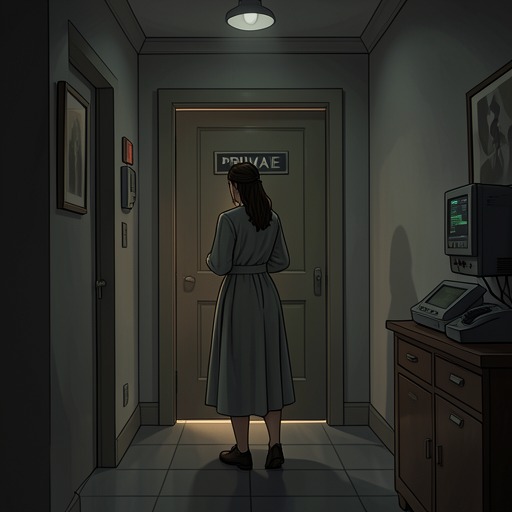
Life inside is regulated by a close timetable. Mary wakes in the basement at six-thirty with her two roommates, to the sound of a bell, and comes to consciousness in fright, gathering her scattered senses. She dresses alongside Trudy, a chain-smoking divorcee with a shrill face. They queue for the bathroom while Honey, a young Swede described as apathetic, lingers in bed moaning before joining them later for breakfast upstairs. Mrs Pilkington, the Sri Lankan co-superintendent, eats alone at a separate table and watches the girls with cursory severity. Her husband, Mr Pilkington, is already at work on the day’s paperwork in a hot office near the front door. The rule is blunt: any trouble, and the girls are out.
Breakfast costs sixty pence, so Mary drinks only tea. The small detail measures the material limits that continue after she has found a bed: reaching the hostel does not mean that she can afford everything offered there. Trudy warns that she will go blind; Honey replies that she will not. Their brief exchange sits within a routine of bells, queues, supervision, paperwork, and scarce money. Mary has arrived, but admission is not the same as ease.
Significance of the move
The hostel offers Mary a place to go at the moment the Botham home can no longer support her, but its welcome is conditional and its routine disciplinary. The journey makes that transition tangible: clothes inherited from the family, four pounds from Gavin, an address on a scrap of paper, and a suitcase that grows heavier as the day passes. Her first memory interrupts the practical business of finding the hostel with an image of the life she once could only observe through windows. The move thus joins immediate material displacement to the emerging return of her past, while placing Mary among women whose lives, like hers, have been marked by damage and limited choices.